The project at a glance
My role, decisions and results
My role: lead the 2021 redesign of xamax.ch, from scoping to user feedback. Partners delivered the design and development; I coordinated their contributions with those of the club.
My decisions: prioritise mobile use, simplify access to news and ticketing, replace the hard-to-maintain custom CMS, and manage scope and resource trade-offs.
The results: the website launched in November 2021. Historical reports show online ticket sales share moving from 25% to 50% (+25 percentage points) and mobile bounce rate from 52.11% to 43.34% (−8.77 points). Other indicators were mixed; these changes cannot be attributed to the redesign alone.
The starting point: the 2011 website
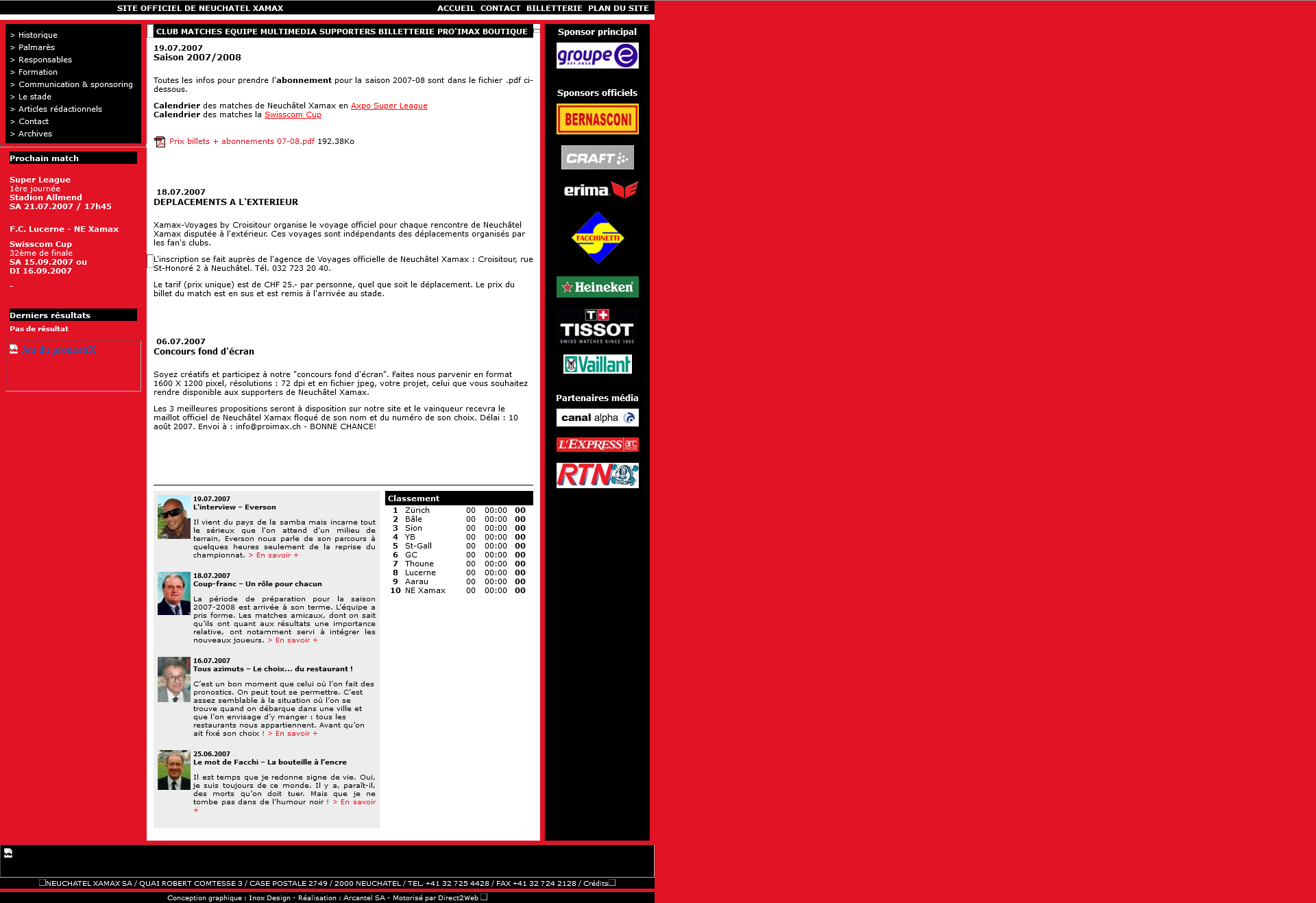
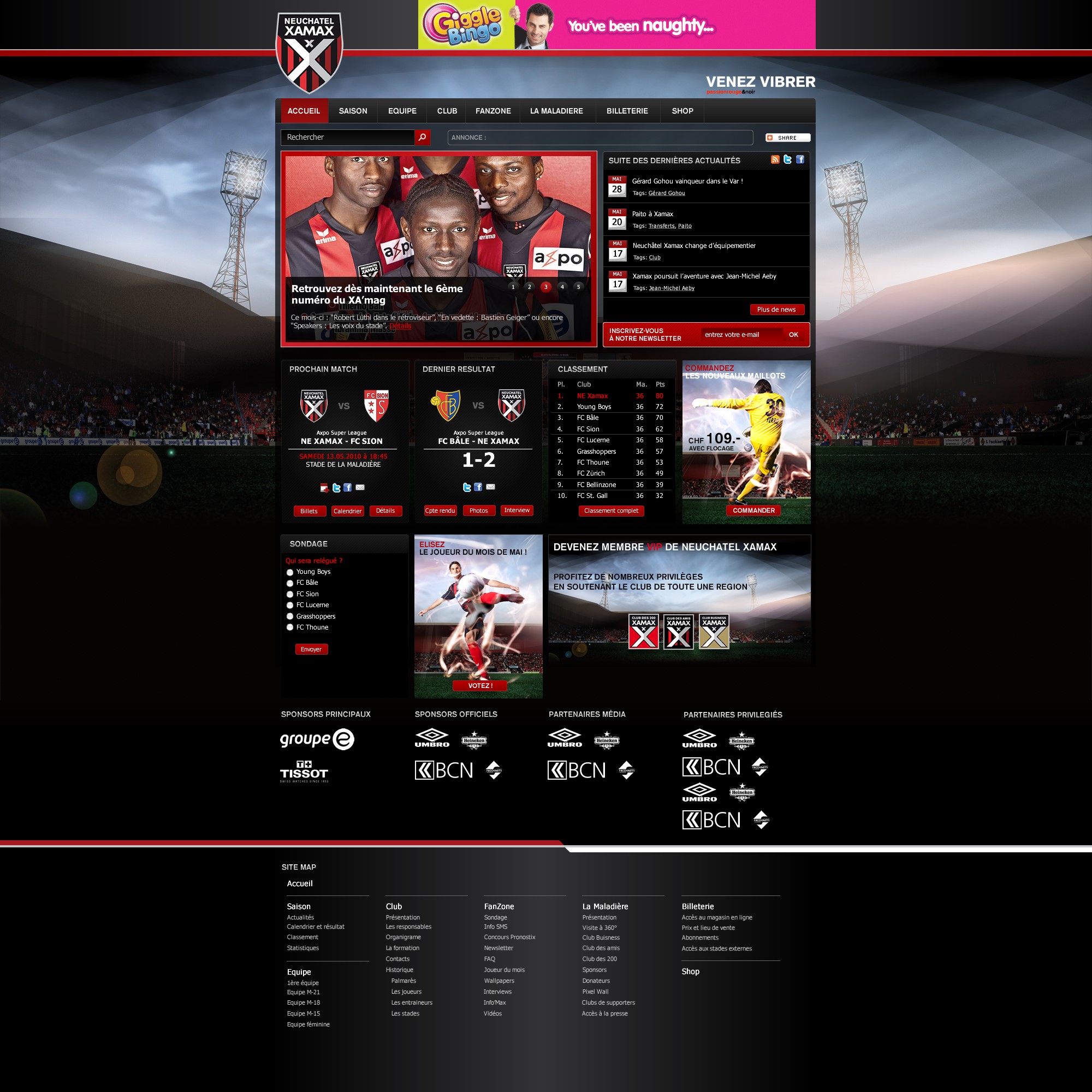
I had designed the previous site with Noël Jobé at Option Web, following an assignment from Pro’Imax in 2010. Nine months of work delivered a custom CMS, live match commentary, statistics, archives, a newsletter and fan services. A decade later, maintainability and mobile usage called for a different approach.
2021
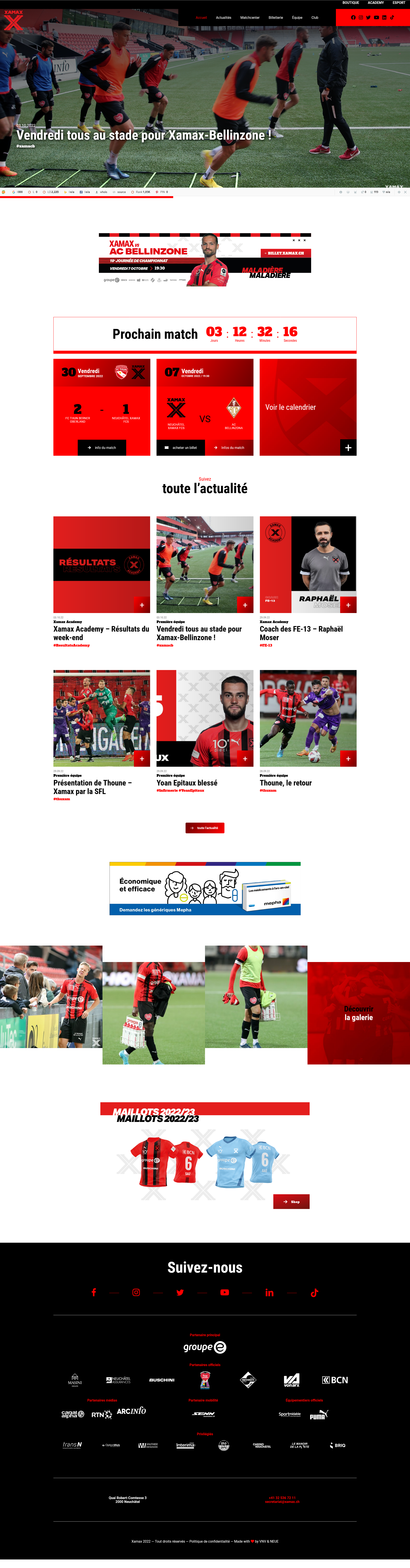
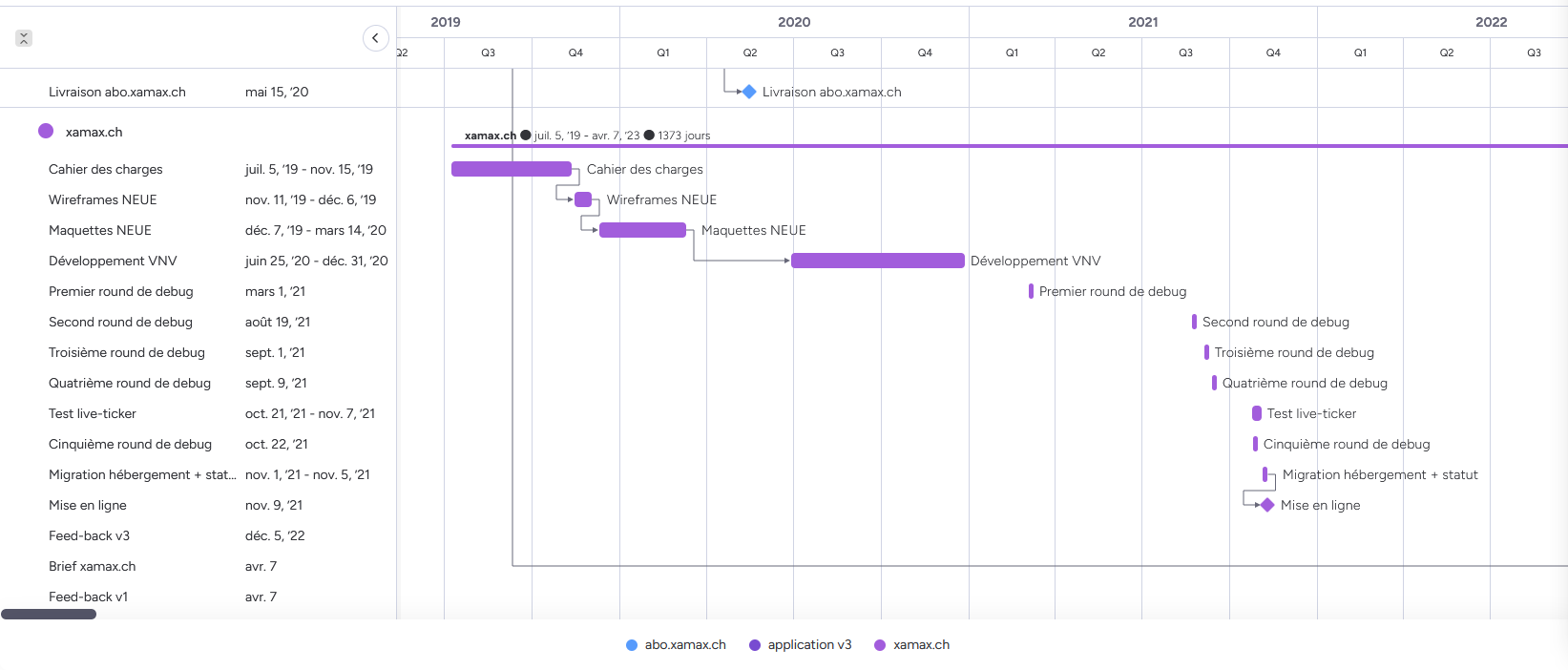
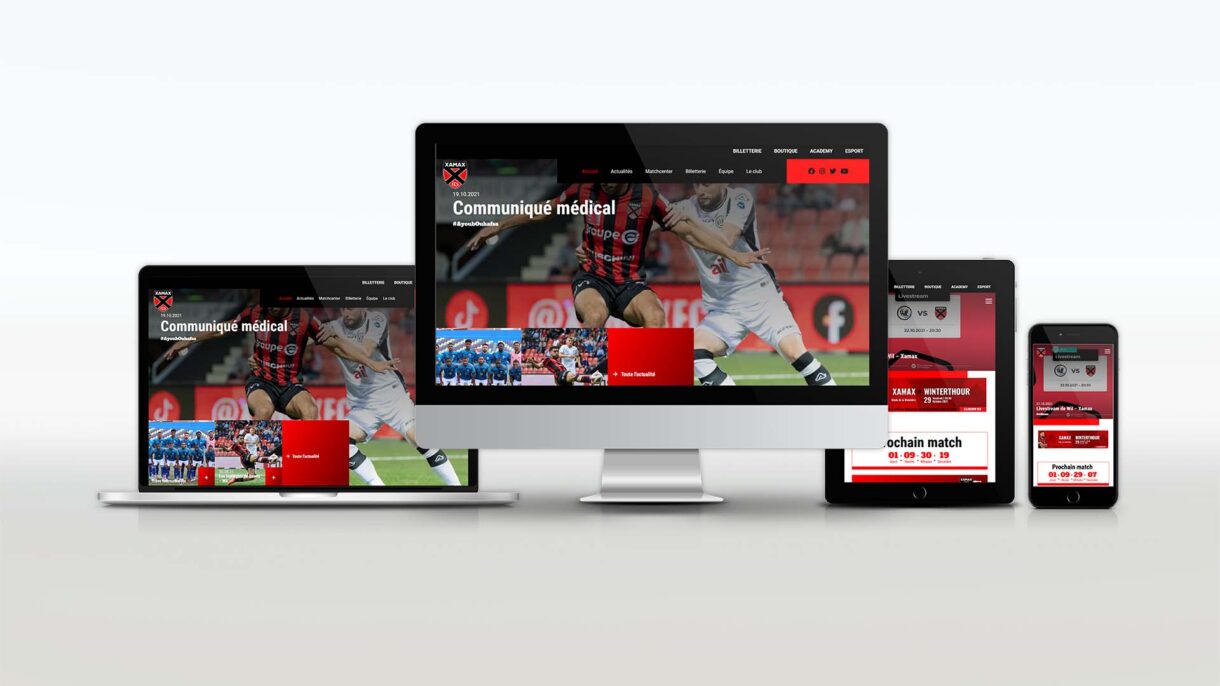
The new xamax.ch went live in November 2021 with the club’s partners. I led objectives, specifications, agency coordination and user feedback. Mobile accounted for around 70% of the audience in the period studied and guided navigation and content choices.
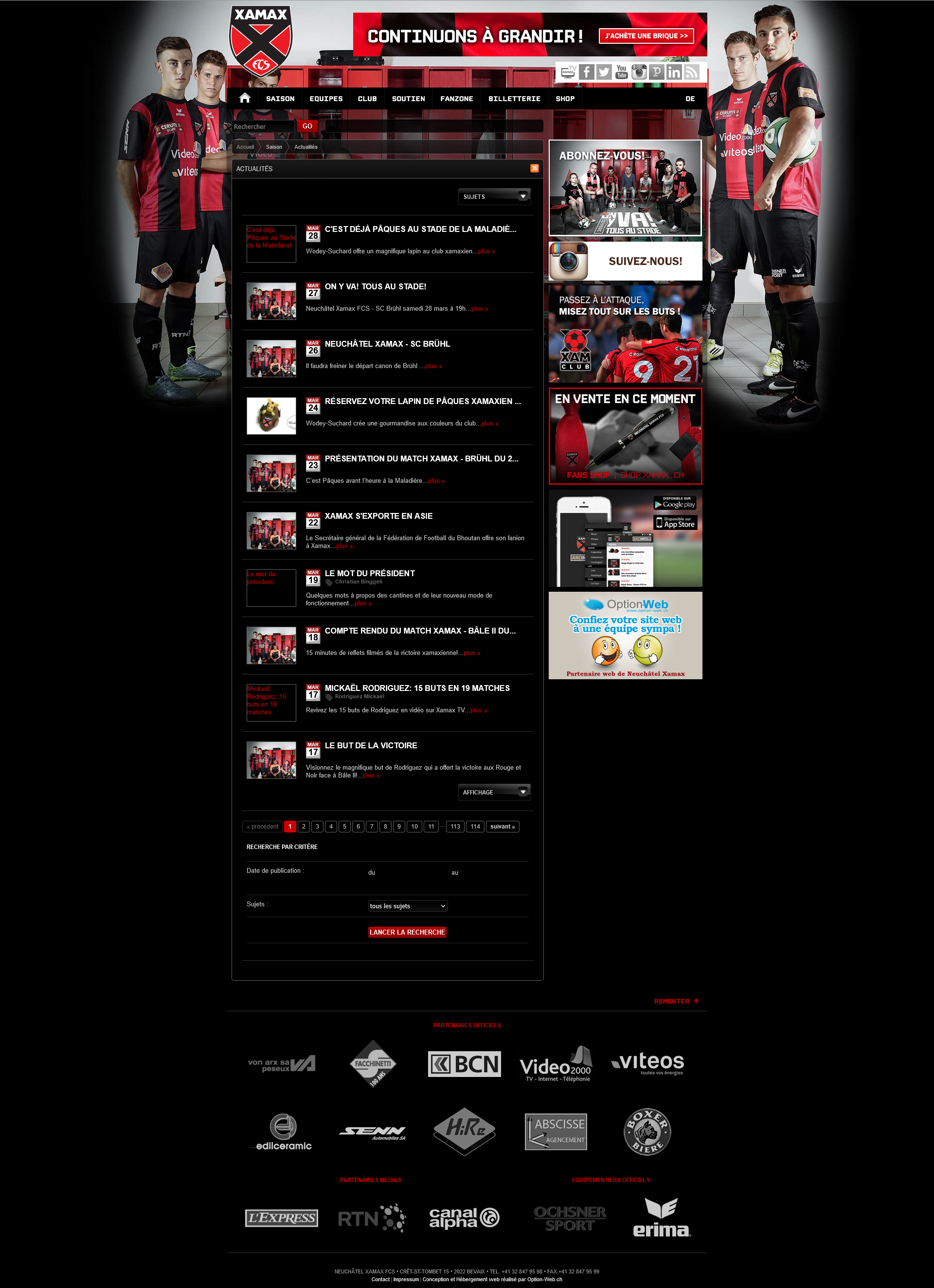
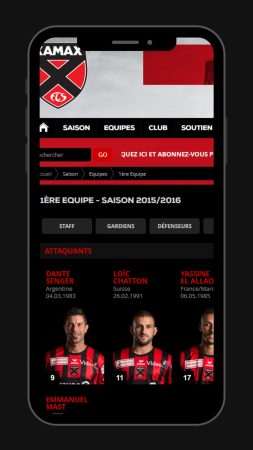
The evolution of Xamax websites
Project delivery
Audit
The challenge
After ten years of changes, the custom CMS was difficult to maintain. Mobile navigation and the entry page made news harder to access. Staff also needed an easier way to create campaign pages for season tickets and other offers.
Objectives
Mobile use
The starting figures were a 58.51% mobile audience share and a 52.11% mobile bounce rate. The objective was easier access to relevant content and actions on a phone.
Access to offers
The dossier recorded 25% of tickets sold online. The goal was to simplify purchases, make ticketing easier to find and improve visibility of merchandise offers.
Requirements specifications
The specifications positioned the website as the club’s main gateway to purchasing platforms and a reference medium for fans and sponsors.
Requirements included brand consistency, adaptable pages, advertising inventory, sponsor visibility, French and German content and accessibility. The site needed to be fast, clear and easy to navigate, with key actions and social channels readily available.
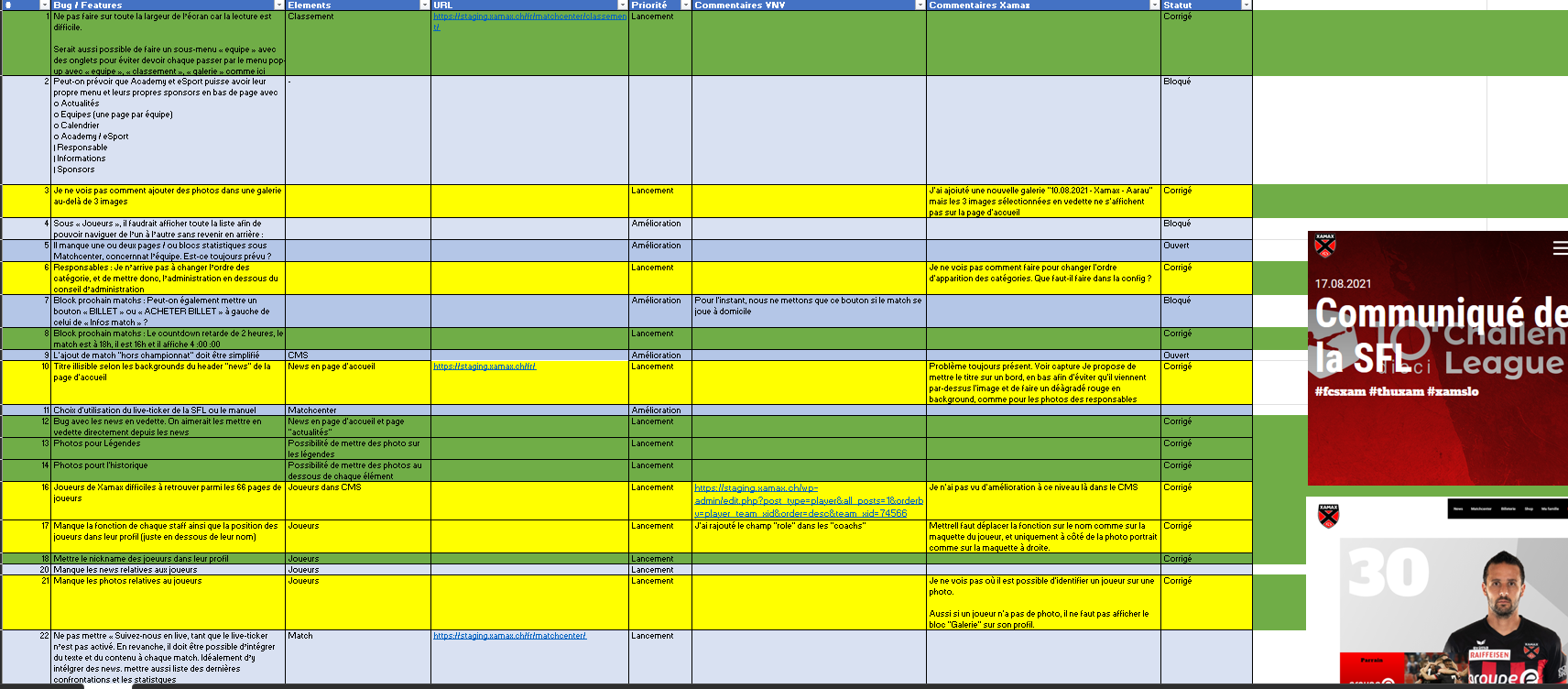
The project moved through scoping, user journeys, wireframes, integration, content migration and acceptance testing. Partners handled design and development; the club led requirements, content and the marketing plan. The complete site launched in November 2021.
Design
The design followed Xamax’s red, black and white identity, while supporting adaptable layouts, advertising and sponsor placements, multilingual content and direct access without a splash page.
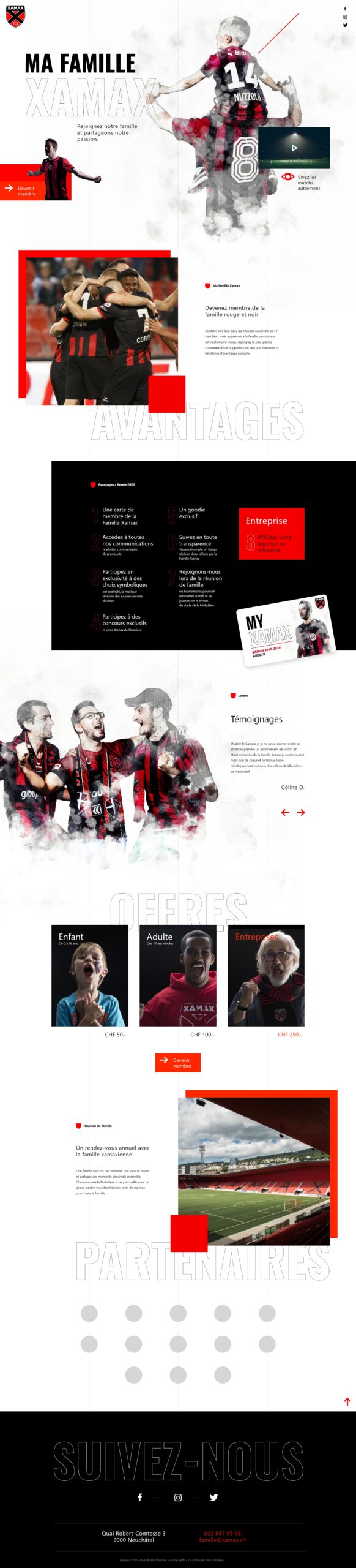
Season-ticket microsite wireframes
Season-ticket microsite wireframes helped validate the information structure and access to offers with the partner.
Main website wireframes
Wireframes for the main site tested navigation against fan and club needs. Discussions with the agency led to several iterations before mock-up approval.
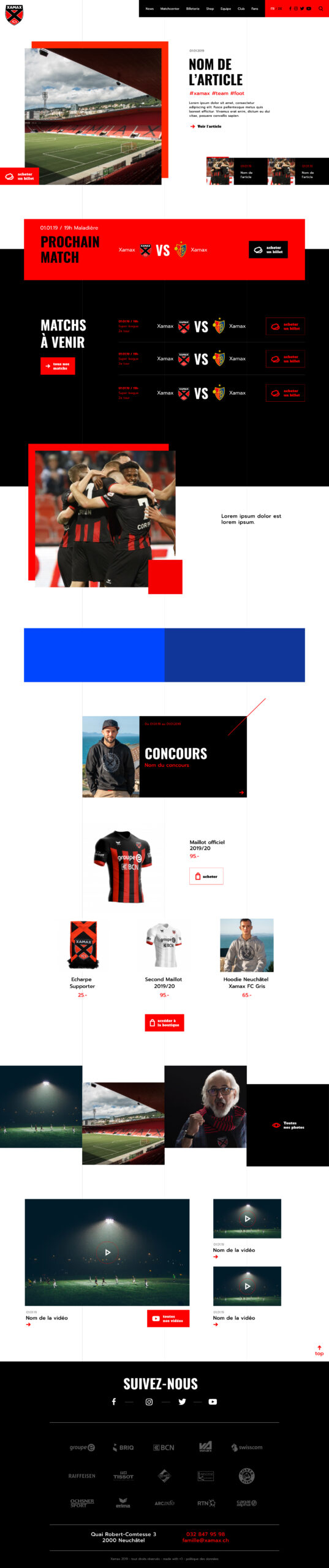
Mock-ups
I reviewed the partner’s Adobe XD mock-ups, proposed adjustments and checked alignment with fan and club needs. Early validation allowed us to discuss navigation and content hierarchy before integration.
Project management
I coordinated the design and WordPress development partners and internal contributors. The project included SFL data integration and adaptation of the club app, which had previously relied on XML files.
During the pandemic, regular remote meetings and schedule adjustments supported scope management. After launch, feedback led to clearer live-match signalling and simpler navigation.
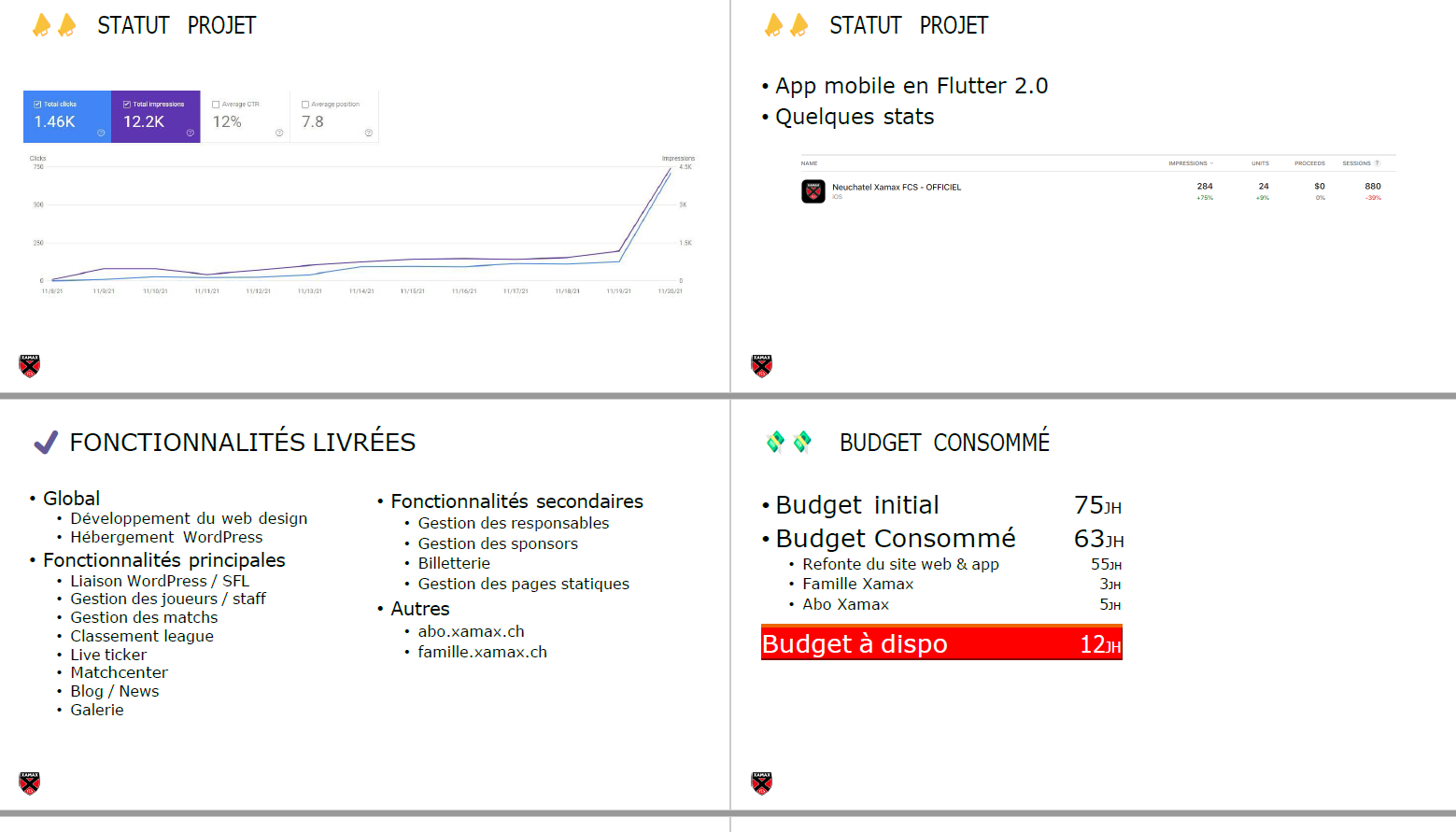
Budget
Budget monitoring covered partner time and resources. Contributions still have a value and cost even where direct invoicing is limited by a partnership. I followed requirements, trade-offs and variances to retain control of scope.
Main website features
News
Regular club, team and match updates make the site a source of current information.
Matchcentre
- Live commentary and match information
- Statistics and line-ups
- Fixtures and results
- Access to ticketing
Players and staff
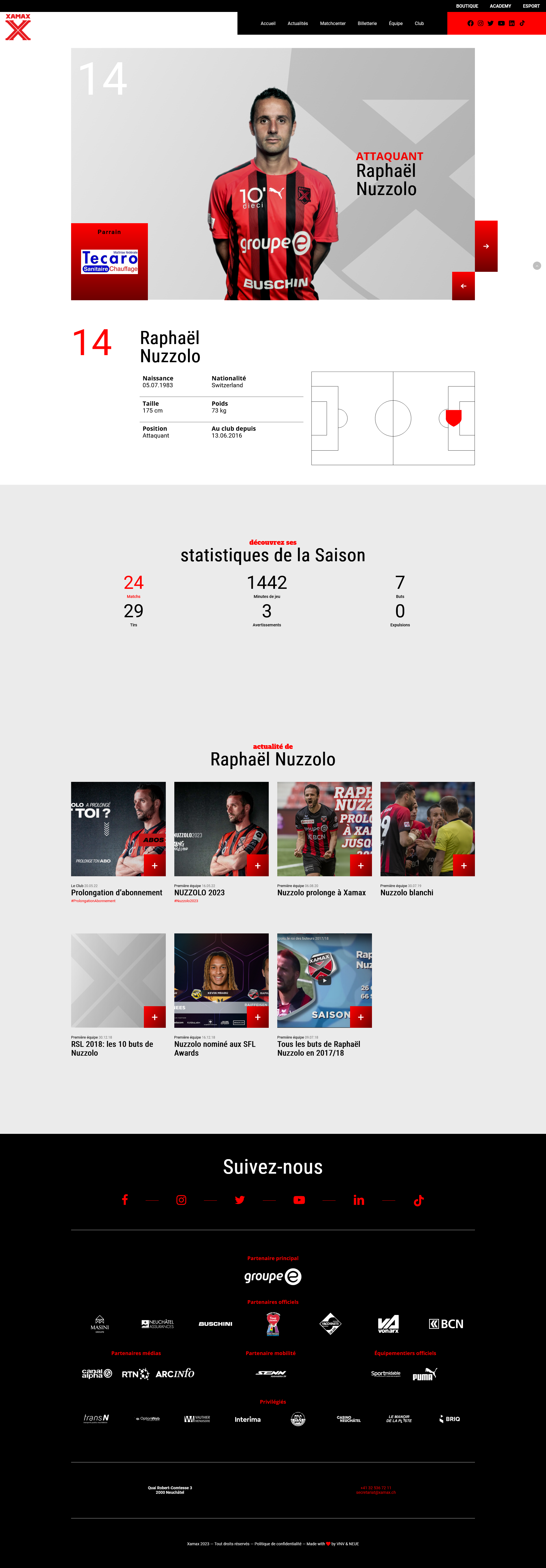
Profiles, photographs and relevant information about the players, coaching staff and club personnel.
League table
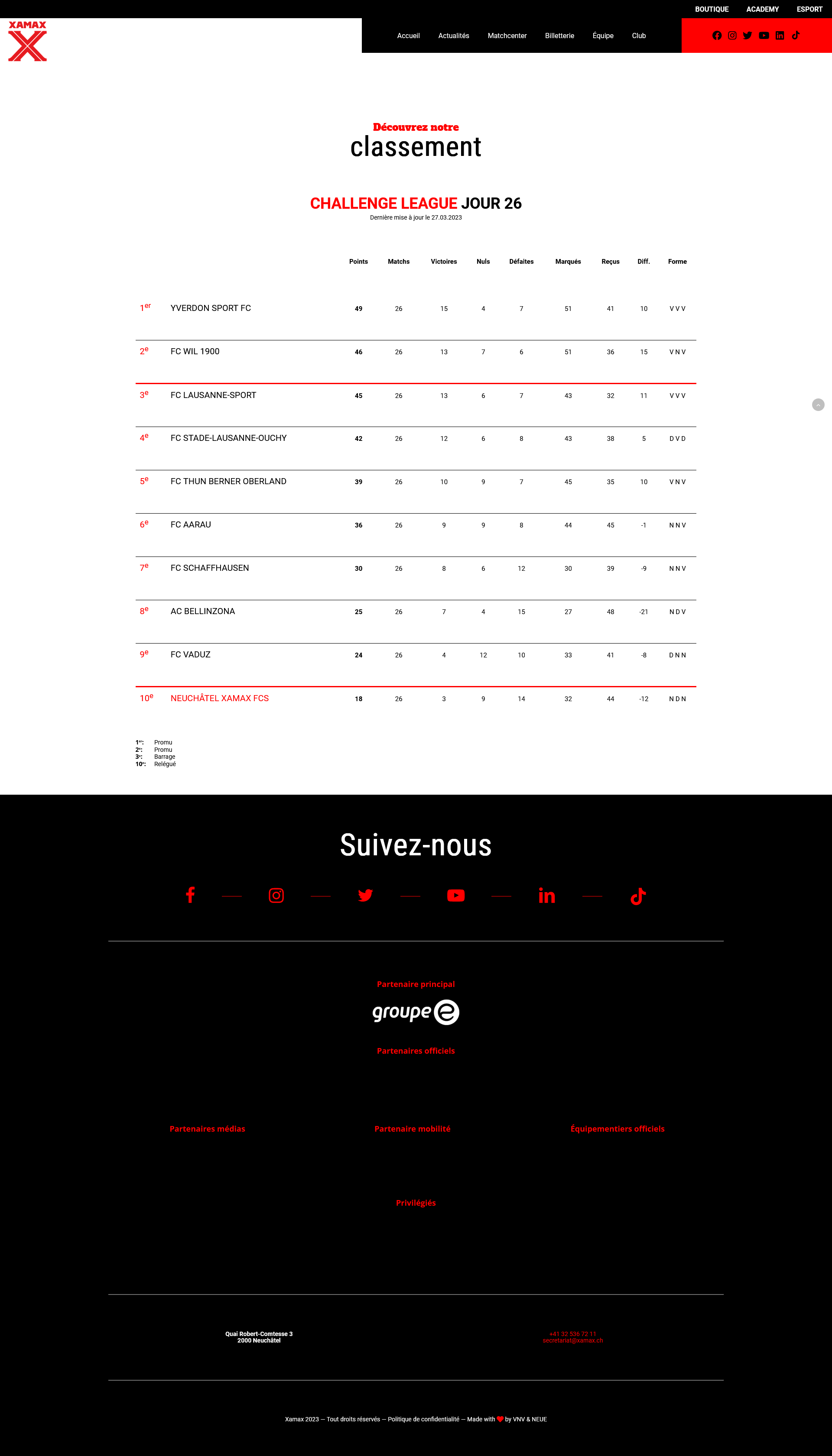
League position, points and other teams’ standings help fans follow the season.
Information pages and forms
Reusable page layouts and forms support information, enquiries, event registrations and contact with the club.
Performance indicators
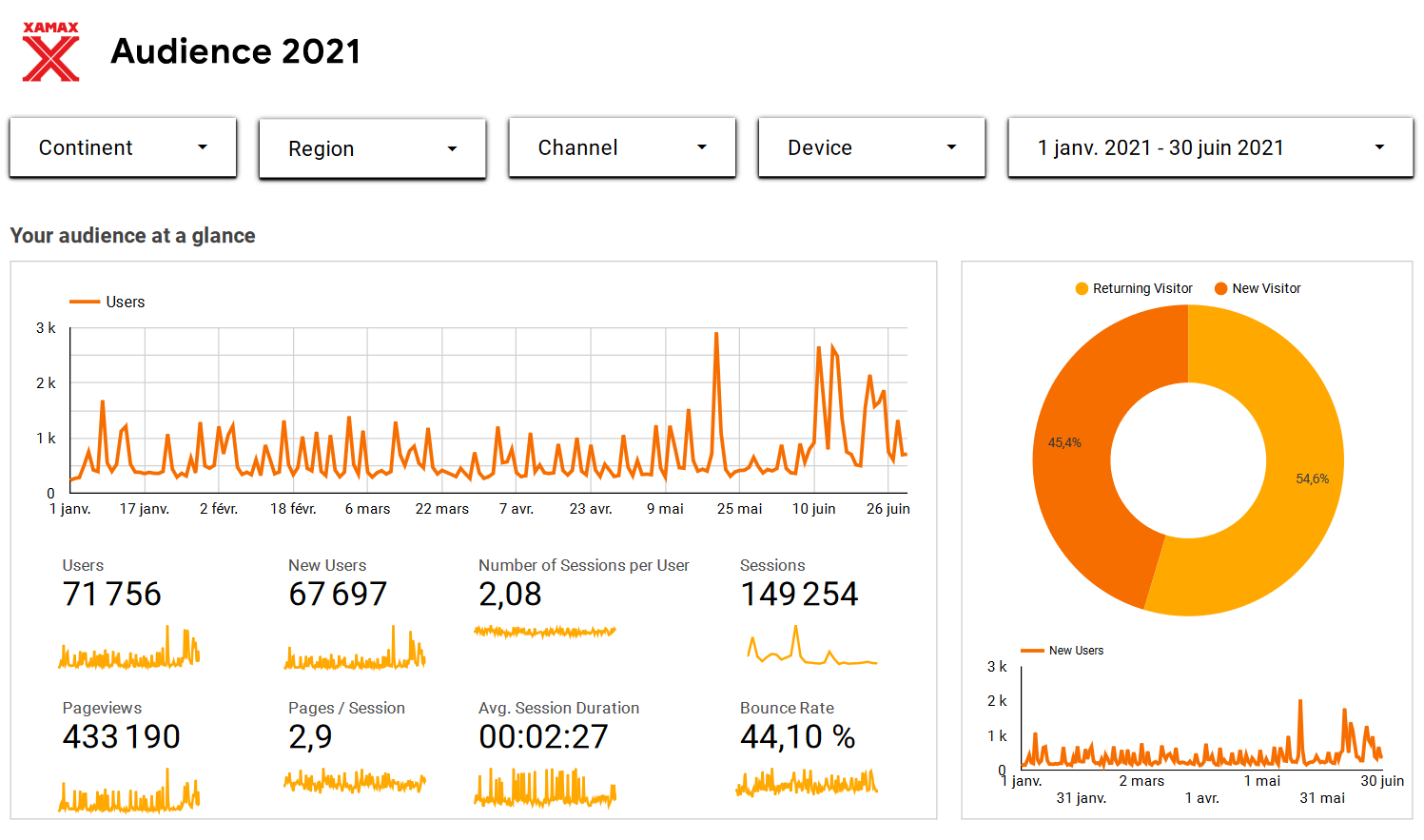
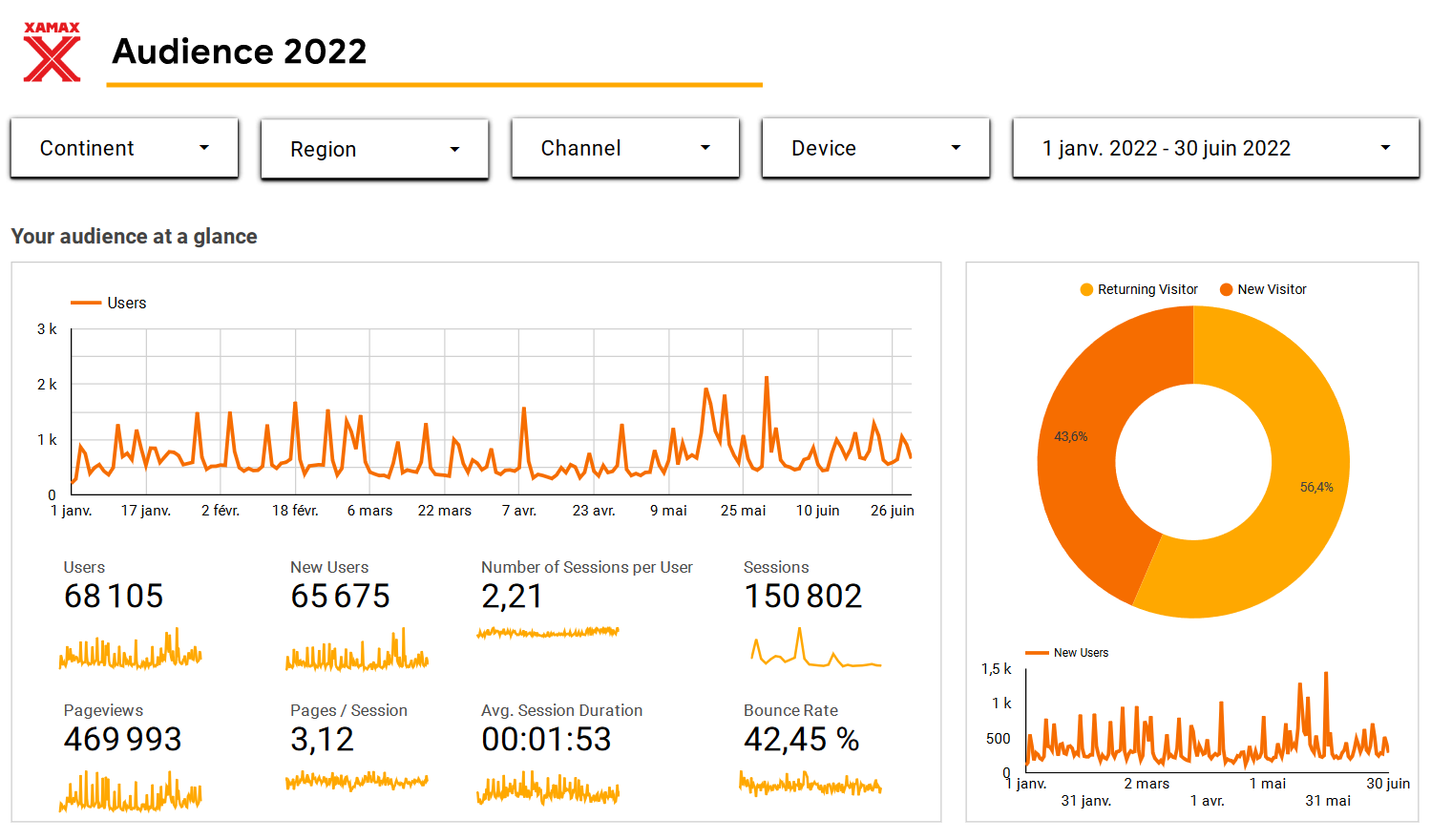
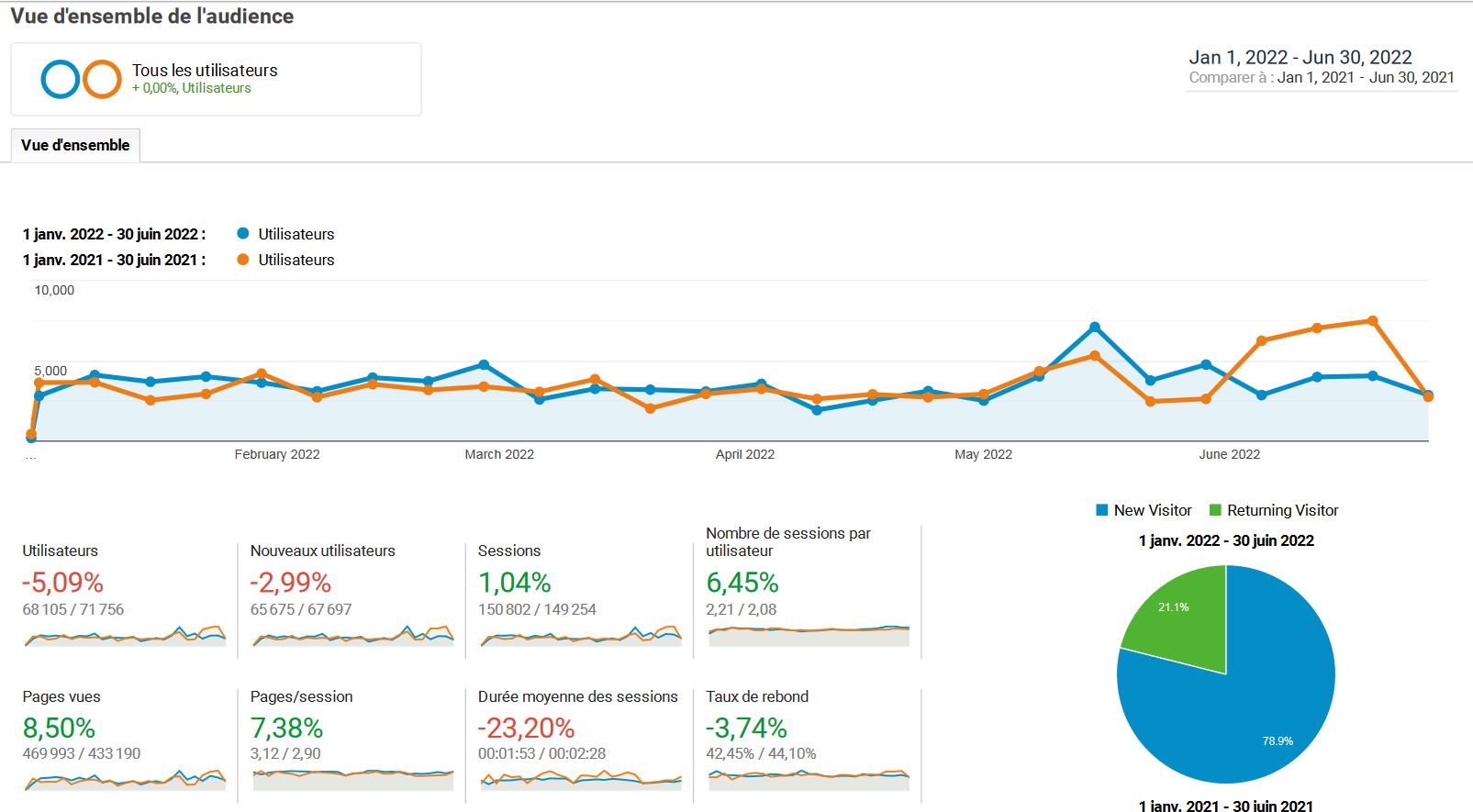
The reports compare 1 January–30 June 2022 with 1 January–30 June 2021. Across devices, sessions rose 1.04% and pages per session 7.38%, while users fell 5.09% and average session duration 23.2%.
On mobile, sessions rose 14.51% and pages per session 20.5%, while average duration fell 32.51%. Results were mixed. Sporting calendars, content and measurement conditions also affect these figures.
Results
Mobile audience and bounce rate
Mobile audience share: 58.51% → 70.92%, or +12.41 percentage points and +21.21% relatively.
Mobile bounce rate: 52.11% → 43.34%, or −8.77 points and −16.83% relatively. A lower bounce rate does not itself establish longer visits.
Online ticket sales share
25% → 50% in the recorded observations: +25 percentage points, or a 100% relative increase. This measures the online channel’s share, complementing audience and journey analysis.
About this experience
My role
Connecting strategy and delivery
I defined needs and priorities, wrote specifications and coordinated agencies, the developer and internal contributors. My role covered scope, trade-offs, user journey validation and feedback.
Partners delivered design and development. I coordinated their work with the club leadership and the press, archives and marketing teams.
Method
How I led the project
- Scope: combine statistics, feedback and CMS constraints to set priorities.
- Coordinate: bring agencies, the developer, press, archives, marketing and administration together around deliverables and approvals.
- Make trade-offs: track scope, time and requirements, including partner contributions.
- Deliver and adjust: support content migration, acceptance testing and feedback-driven changes.
Deliverables included the main site and the season-ticket campaign page. Higher season-ticket sales were an objective; no quantified gain attributed solely to this redesign is claimed.